
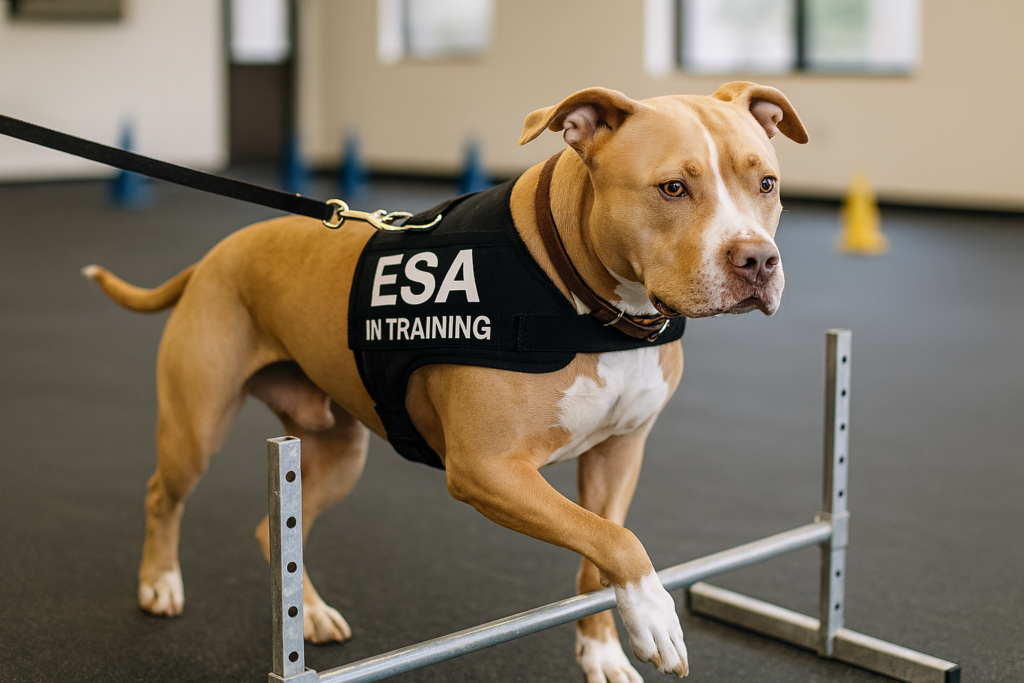
Understanding Emotional Support Animals (ESAs)
Emotional Support Animals (ESAs) provide comfort and therapeutic benefits to people dealing with mental or emotional health challenges such as anxiety, depression, or PTSD. Unlike service animals, ESAs don’t need specialized training—their value comes from the emotional stability and companionship they offer.
Legally, ESAs are recognized under the Fair Housing Act and parts of the Air Carrier Access Act, giving owners certain rights, such as living with their animal in housing that normally restricts pets. However, ESAs do not have the same public‑access privileges as service animals. To qualify, individuals must obtain an ESA letter from a licensed mental health professional, confirming the animal’s role in supporting their well‑being.
Registering a dog as an ESA requires proper documentation and responsible ownership. With these guidelines in mind, people can better understand how any breed—including Pit Bulls—can serve as a meaningful emotional support companion.
Why Choose a Pitbull as an Emotional Support Animal?
Pitbulls are often misunderstood, but many of their natural traits make them excellent emotional support animals. They’re known for their loyalty, affection, and strong bonds with their owners, which can provide steady comfort during moments of stress or emotional difficulty. Their intuitive nature helps them recognize when their person is struggling and offer support.
Pitbulls are also highly intelligent and eager to learn, making them responsive to emotional cues and adaptable to different needs. Many owners share stories of their pitbulls offering reassurance during anxiety, depression, or overwhelming moments.
Their physical presence adds another layer of comfort. The breed’s sturdy build and love for close contact—like cuddling or leaning in—can create a powerful sense of safety and calm. Despite common misconceptions, pitbulls are not inherently aggressive; with proper training and socialization, they are gentle, nurturing, and deeply connected to their families.
With their mix of loyalty, intelligence, and affection, pitbulls can make exceptional ESAs and help challenge the negative stereotypes surrounding the breed.
Training and Integrating Your Pitbull as an Emotional Support Animal
Training your Pitbull to function as an effective emotional support animal (ESA) involves a combination of obedience training, socialization, and establishing a strong bond. First and foremost, it is essential to focus on basic obedience commands such as “sit,” “stay,” “come,” and “heel.” These foundational skills will not only help ensure safety and control but also promote a sense of discipline in your dog. Positive reinforcement techniques can be employed during training, rewarding your Pitbull with treats, praise, or playtime for following commands.
Socialization plays a crucial role in preparing your Pitbull for various environments and interactions. Expose your dog to different people, animals, and environments from a young age to reduce anxiety and promote comfort in social settings. Gradually introducing your dog to new experiences can foster confidence and adaptability. This process is vital as emotional support animals must remain calm and composed in various situations.
Building a strong bond with your Pitbull is equally important. Spend quality time engaging in play, training sessions, and positive interactions to develop trust and a secure attachment. This relationship not only enhances the emotional connection between you and your pet but also ensures your dog recognizes you as its primary support system.
Consistency and patience are essential traits for any handler. Dogs thrive on routine; therefore, establishing a consistent training schedule will reinforce learning. It’s important to be patient, as training can take time and requires adjustments based on your dog’s personality and responsiveness. Additionally, monitoring your Pitbull’s behavior in various settings is crucial to managing its role as an ESA effectively, ensuring that it meets your emotional needs while maintaining good behavior.
Recommended Products to Support Your Pitbull as an ESA
Transforming a Pitbull into an effective emotional support animal (ESA) can be greatly enhanced with the right products and tools. These items not only assist in training but also promote comfort and well-being, ensuring that your canine companion thrives in their role. Here, we outline key products that can enhance your journey with your Pitbull as an ESA.
First and foremost, training aids are essential for teaching your Pitbull the desired behaviors that define a reliable ESA. Consider tools like clickers, training treats, and obedience training courses. Many online platforms offer structured training programs designed specifically for building a bond between the owner and their dog, which is crucial for an ESA’s effectiveness.
Comfort is another vital aspect. A calming bed can provide a safe haven for your Pitbull, especially if they experience anxiety in stressful situations. Additionally, anxiety wraps can be beneficial during overwhelming moments—these wraps apply gentle pressure on the body, which can have a reassuring effect.
Nutrition and general health are critical components of your Pitbull’s well-being. Look for meal plans tailored to the specific energy needs and health requirements of your breed. Supplementing their diet with high-quality food can enhance mood stability and overall vitality. Grooming products like brushes, shampoos, and dental care items contribute to maintaining physical comfort and wellness.
Lastly, joining support groups or online forums can be incredibly beneficial. Connecting with other Pitbull owners who have successfully trained their pets as ESAs can provide invaluable insights and encouragement. Resources available through these groups often include personal experiences, expert advice, and additional training tips.