
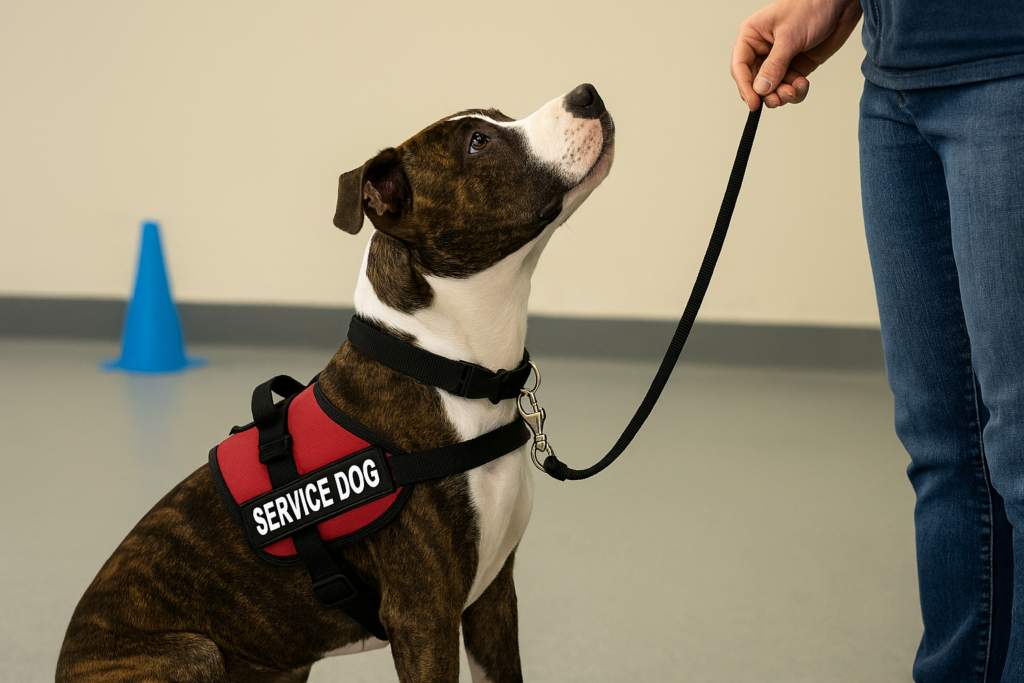
Understanding the Role of Service Dogs
Service dogs are specially trained animals that perform specific tasks to assist individuals with disabilities, as defined by the Americans with Disabilities Act (ADA). These tasks are directly related to the handler’s disability and help them navigate daily life with greater independence. Unlike emotional support or therapy animals, service dogs undergo rigorous training to reliably perform these essential functions in public settings.
Service dogs may guide individuals who are visually impaired, alert those who are hearing impaired to important sounds, provide mobility and balance support, or assist with other physical or psychiatric disabilities. Because their work is medically necessary, service dogs are legally permitted in public spaces such as restaurants, stores, and public transportation under federal law.
Understanding the role of service dogs highlights their importance in improving quality of life for people with disabilities. Their training, task-focused purpose, and legal protections distinguish them from other assistance animals and underscore the critical role they play in promoting independence and accessibility.
Laws and Regulations Surrounding Service Dogs
The Americans with Disabilities Act (ADA) provides the federal legal framework for service dogs in the United States. Under the ADA, a service dog is defined as a dog individually trained to perform specific tasks for a person with a disability. This definition is critical, as it determines the public access rights of service dog handlers and the obligations of businesses and public entities.
The ADA recognizes only dogs as service animals and does not include emotional support animals, therapy dogs, or comfort animals. Importantly, the law places no breed restrictions, meaning a pit bull can legally be a service dog if it is properly trained to perform disability‑related tasks.
While the ADA establishes nationwide protections, some states may have additional regulations, such as voluntary registration systems or specific handler rights. Requirements vary by state, so prospective handlers should review both federal and local laws.
Service dogs are not required to wear vests or identification, and individuals with disabilities are legally allowed to train their own service dogs. However, professional training can improve reliability and public access success. Understanding these legal guidelines helps ensure handlers’ rights are protected and reduces confusion surrounding service dog access and compliance.
Common Myths About Pit Bulls as Service Dogs
Pit bulls often face stigma and misconceptions that unfairly question their suitability as service dogs. One of the most common myths is that pit bulls are inherently aggressive. This belief is largely shaped by media portrayals rather than evidence. In reality, pit bulls—like all breeds—can be well‑mannered, calm, and reliable when properly trained and socialized.
Another misconception is that pit bulls lack the intelligence or emotional awareness needed for service work. In fact, pit bulls are known for their high intelligence, loyalty, and eagerness to please, qualities that make them capable of performing service tasks such as mobility assistance, distress recognition, and disability‑related support.
Many people also wrongly believe that only certain breeds, like Labradors or German Shepherds, can be service dogs. However, the Americans with Disabilities Act (ADA) places no breed restrictions and focuses solely on a dog’s ability to perform trained tasks. This means a properly trained pit bull can legally qualify as a service dog.
Finally, while pit bulls are strong dogs, their strength can be an advantage, particularly for mobility or balance assistance. Handlers often highlight their pit bull’s strong bond, dependability, and adaptability—proving that training, temperament, and responsible handling matter far more than breed.
Training and Supporting Your Pit Bull as a Service Dog
Training a Pit Bull to become a service dog requires consistency, patience, and positive reinforcement. Thanks to their intelligence and eagerness to please, Pit Bulls can excel in service roles when trained correctly. The process should begin with basic obedience training, using reward‑based methods and consistent verbal and visual commands to reinforce good behavior.
Once foundational skills are established, training can progress to disability‑related tasks tailored to the handler’s needs, such as mobility assistance, item retrieval, or balance support. Working with a professional service dog training program can help ensure reliable task performance and proper behavior in public environments.
Socialization is equally important. Exposing a Pit Bull to different people, settings, and distractions builds confidence, reduces anxiety, and improves focus. Structured classes, public outings, and controlled interactions help prepare the dog for real‑world service work.
Using the right training tools and equipment can enhance success. A well‑fitted service dog vest helps identify the dog’s role, while clickers, treats, and training toys keep sessions engaging. Essential care items, such as portable water bowls and grooming supplies, also support the dog’s comfort and well‑being.
With dedication, proper training, and positive reinforcement, a Pit Bull can become a well‑mannered, effective service dog, offering reliable assistance and meaningful support to its handler.